Some people move through the world as if it were a buffet of delights—reveling in a glass (or *ahem* a bottle) of wine, lingering in front of a painting long enough to make security nervous, closing their eyes while tasting crème brûlée, admiring a slow-burn sunset, disappearing into a perfect conversation, losing track of time over a beautifully prepared meal, or nuzzling into a cashmere sweater like it’s a long-lost lover.
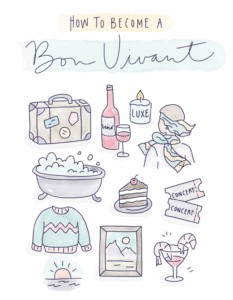 These people have a name: bon vivants. Translated from a culture of people who know a thing or two about the enjoyment of life’s luxuries, bon vivant is a French term that means “good living” or “one who lives well.” Bon vivants are connoisseurs of enjoyment—individuals who turn ordinary life into something richer, more flavorful, more worth being alive for.
A bon vivant is not simply a person who enjoys life; they practice enjoyment the way others practice piano or Pilates. They squeeze the juice out of experiences. They are fluent in delight. They know that pleasure is not a blasphemous sin but a science-backed life strategy.
And here’s the good news: becoming a bon vivant doesn’t require mountains of money, a sommelier certification, or a pied-à-terre in Paris (although those things are undeniably fabulous). It requires attention, intention, and a willingness to savor the crap out of being alive.
Let’s turn to psychology (the academic kind, not the armchair TikTok kind) to see how the pursuit of pleasure can be both delicious and defensible.
-
Admit pleasure is good for you
Psychology spent its early years acting like pleasure was the flaky cousin of meaning. But contemporary research shows that the hedonic well-being experiences of pleasure, comfort, joy, and sensory delight are legitimate, measurable components of psychological health.
Positive emotions broaden our perspective, improve creativity, increase resilience, and help us build resources over time.
Translation: pleasure is not frivolous; pleasure can be productive.
To become a bon vivant, treat pleasure not as a guilty indulgence but as a meaningful contributor to your overall well-being. Whether it’s your morning latte, a warm bath, or a beautifully arranged tea tray, pleasure counts.
-
Savor the flavors
A bon vivant doesn’t necessarily have more pleasures; they magnify and stretch the pleasures they already have.
Savoring, defined as the capacity to attend to, appreciate, and enhance positive experiences, has been shown to increase happiness, buffer against depression, and heighten life satisfaction. There are multiple forms of savoring:
- Anticipatory savoring (looking forward to delights… like a scoop of pistachio gelato from that new Italian bakery on Friday night)
- Present-centered savoring (fully absorbing the moment… like smelling the wet cedar trees on a walk)
- Reflective savoring (revisiting a memory… like flipping through an old calendar and playing the flashback game: “remember when we skinny dipped in Vegas?”)
Savoring turns life into art—bon vivants simply practice it more consistently. To cultivate savoring:
- Slow down sensory experiences (taste more slowly, breathe more deeply). Make the special meal, for example, last almost absurdly long.
- Share pleasures with others (co-savoring boosts positive emotion). Walking through a gallery with a friend offers a chance to appreciate/ giggle at the pieces in a way you couldn’t do alone.
- Note or photograph pleasant moments. Challenge yourself to take a few “best of” photos and then put your phone away.
- Narrate the sensory details to yourself, as though you were recording an audiobook.
-
Seek out small luxuries, not extravagance
Research on hedonic adaptation shows that small, frequent treats give more sustained happiness than rare, extravagant ones.
In other words:
A daily cappuccino > a once-a-year yacht trip.
(Though if you do have a yacht trip lined up, you can email me my invitation at jodi @ fourthousandmondays dot com and please make sure there are gluten free blinis to go with the caviar. Thanks so much.)
Bon vivants excel at micro-luxuries:
- Lighting a candle while answering emails
- Putting lemon in their water because they have standards
- Buying the good bread—with the European butter, obviously
- Putting together a thoughtful playlist and letting it be the soundtrack in the background of life
- Slipping on soft socks and whispering “yes”
These small delights accumulate. They create a life you want to be awake for.
-
Cultivate taste by being curious
There is a myth that bon vivants are snobs, mostly because a lot of bon vivants are snobs. But classy bon vivants aren’t obnoxious gatekeepers of good taste—they’re explorers.
Research shows that novelty and exploration spark vitality and meaning; trying new things literally invigorates our psychological systems.
So:
- Order the dish you can’t pronounce
- Watch foreign films (with correspondingly foreign snacks) even if you need subtitles
- Wander through museums until something new grabs your interest
- Listen to music you aren’t familiar with
- Read books about subjects you don’t understand
- Visit places you’re not already exhaustively well-read about
Cultivating taste requires only curiosity and a willingness to be delighted.
-
Share joy like it’s contagious (because it is)
One of the most powerful happiness boosts comes from capitalization—sharing positive events with others. People who talk about their joys actually intensify them.
This is why bon vivants:
- Host dinners
- Toast often
- Text you pictures of their pastries
- Insist you “try this bite, you have to try this bite”
- Make rituals around meals
- Explore cities with friends
- Share favorite poems or songs
- Turn ordinary gatherings into celebrations
Bon vivants often bring others along for their pleasures; pleasure shared is pleasure multiplied. How enjoyable is an incredible bottle of wine if it’s enjoyed alone?
-
Practice mindful abundance, not mindless excess
Mindfulness enhances our ability to experience pleasure and reduces emotional reactivity. A bon vivant isn’t a hedonist on a bender—they’re a mindful curator of what feels good.
A mindfully abundant bon vivant says:
- “There is enough joy to go around”
- “Beauty is always available”
- “I don’t need more; I need to notice more”
- “I am allowed to enjoy my life, and life involves truffle fries”
A bon vivant doesn’t hoard pleasures. They honor them, as sweet and simple as they can be. Isn’t it true that a single piece of extraordinary, well-savored chocolate can be as much of a treat as a bowl full of Halloween candy? (The jury’s still out on that one.)
Let life be beautiful.
Beauty isn’t ornamental, it’s psychologically nutritious. A growing body of research suggests that aesthetic experiences—art, nature, music, beauty—predict greater life satisfaction and emotional well-being. A bon vivant doesn’t simply consume beauty… they court it.
So:
- Keep fresh flowers in your home
- Watch the sky change colors like it’s the last time you’ll ever see it
- Fill your environment with things that make your eyes happy
- Look at paintings until you feel something stir inside you
- Choose clothing that feels beautiful to wear
- Look at photos of nature, which research confirms can be beneficial when you’re stuck inside
A final toast…
Becoming a bon vivant is not about being lavish, fancy, wealthy, or French.
It is about:
- Noticing
- Savoring
- Exploring
- Sharing
- Beautifying
- Enjoying
- Living
- Truffle fries
It’s remembering that delight is not a distraction from life. And living well isn’t about “earning” pleasure. It’s about believing you were born with permission to enjoy your time here.
To live well, you must taste your life. You must invite delight! You must notice beauty! You must savor! So many musts!
So raise a glass, soften your gaze, take a slow bite, breathe something delicious in deep, and welcome yourself into the ranks of people who are not just alive… but luxuriating in life.

P.S.: Reading my book, You Only Die Once: How to Make It to the End with No Regrets will turn you into a real bon vivant, my friend.
P.P.S.: Let’s connect on Instagram!
P.P.P.S.: Oh and just in case you missed it… I’d love you forever if you took 16 minutes out of your life to watch my TEDx talk!